
Catherine Zeta-Jones is about to let the world hear something many viewers have rarely heard on screen: her real Swansea accent.
In Amazon Prime’s upcoming thriller Kill Jackie, premiering on 2 October 2026, Zeta-Jones plays Jackie Price, a woman with a dangerous past who returns to her hometown of Swansea during the filming of the series. According to BBC News, it is her first major screen role using a Welsh accent.
Fans have responded warmly. One viewer said they loved hearing “the queen of Wales sounding Welsh”, while Nation.Cymru reported that audiences were delighted to hear her unmistakable Swansea voice.
Zeta-Jones has also spoken about looking forward to a female-led story involving “empowerment, identity and redemption”.
That feels especially meaningful because, for many years, regional accents have been treated as something actors must soften, hide or leave at the door.
Why do actors feel pressure to hide their accents?
The answer is complicated. Casting traditions, assumptions about class and ideas about what a “leading actor” should sound like have all played a part.
Some actors worry that their accent will make them seem:
- Less polished
- Less versatile
- Too strongly connected to one place
- Unsuitable for romantic, professional or prestigious roles
- Harder for an international audience to understand
British actors know this pressure particularly well. Regional voices are still too often used as quick signals for a character’s job, class or background. A polished accent may be expected for the hero, while a regional accent is given to the comic character, servant or villain.
But an accent is not a limitation. It is part of your history, your musicality and your connection with other people.

What can you lose when you hide your natural voice?
When actors spend years trying to erase their natural accent, they can become disconnected from the very thing that makes their voice interesting.
That does not mean you should use your own accent for every role. Acting is about choice. Learning other accents is a brilliant way to expand your range and access characters from different places.
The important difference is whether you are changing your accent because the role requires it, or because you have been taught that your natural voice is not good enough.
Your own accent can bring:
- Emotional truth
- A strong sense of place
- Individuality
- Warmth and humour
- A sound that audiences remember
Sometimes the most powerful choice is to stop trying to sound like everyone else.
When should you change your accent for a role?
There are many good reasons to work in another accent. The character may be from a different region or country. The story may depend on a particular time and place. Or the director may want the cast to sound as though they belong to the same world.
That is not hiding your identity. It is building a character with care.
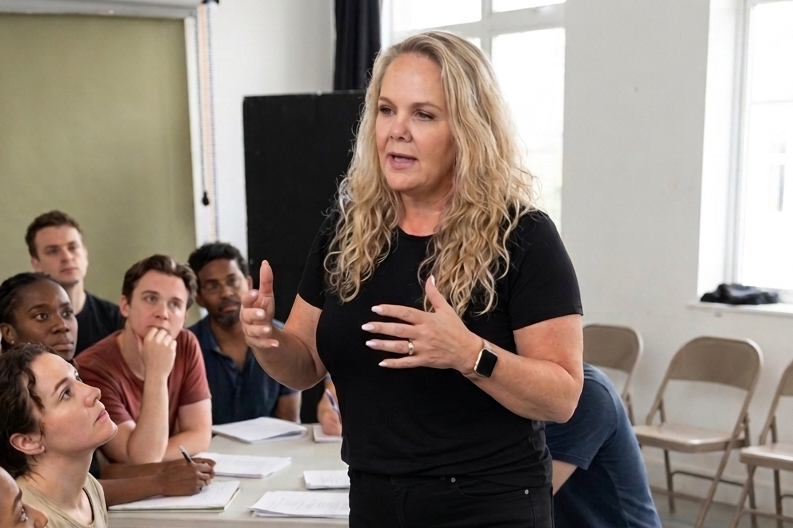
When I coach actors, I encourage them to think of an accent as a creative tool rather than a disguise. You can step into another voice while still keeping a clear connection to yourself.
The goal is not to abandon your own accent. The goal is to become confident enough to move between voices.
How to keep your own accent healthy
If you are working on another accent for several weeks or months, it is worth keeping a little time for your natural voice too.
Try these simple habits:
- Record yourself speaking naturally once a week.
- Read something aloud in your own accent.
- Speak with family or friends who know your everyday voice.
- Notice if you are carrying a character accent into ordinary conversations.
- Give your voice quiet time after long rehearsals.
- Return to your natural accent without judgement.

You do not need to panic if your accent feels slightly different after intensive work. Voices naturally adapt to the people and places around us. With regular awareness, you can keep your natural voice available and strong.
For British actors: your regional accent belongs in every kind of role
If you are a British actor with a Welsh, Scottish, Northern, Irish, Midlands, West Country, Scouse, Cockney or another regional accent, please do not assume it tells casting directors what you can and cannot play.
Your accent may influence the roles you are offered, but it should not define your ambition.
Keep developing your range. Learn British RP, American accents or any dialect that supports your career. But do it from a place of choice, not shame.
Catherine Zeta-Jones using her Swansea accent in Kill Jackie is a lovely reminder that regional voices can carry glamour, danger, authority and complexity. They can lead the story.
Your accent is not something you have to apologise for. It is one of the voices you bring to the work.
If you need support preparing for a role, you can explore 1:1 accent coaching, practise through the Accent Practice Sessions, or use my audition script recording service for a fast, reliable reference.
The right accent for a character should feel like a choice. Your own accent should feel like home.